
BLOG
USB-C Fast Charging Brings Added Convenience
to Non-Contact Electrical Testing ⚡️
August 02, 2026
CATEGORY: ELECTRICAL SAFETY SOLUTIONS

The Problem: Facing 21st-Century Hazards with 20th-Century Tools
Industrial environments have evolved rapidly, yet electrical testing remains largely stuck in the past. For decades, crews have relied on physical-contact probes – a legacy 20th-century testing method that forces technicians to physically touch potentially lethal, live wires just to verify if a circuit is active. This outdated approach introduces severe operational vulnerabilities. A single slip of a probe on a crowded panel can trigger a devastating arc flash, forcing technicians to expose themselves to severe hazards before they even know if a threat exists. In modern, high-stakes maintenance, relying on physical contact isn’t just an efficiency bottleneck; it’s an unnecessary safety gamble that keeps teams in high-risk zones longer than necessary.
The Upgrade: Active Safety from a Distance
The SmartVolt™ 2.0 completely redefines industrial electrical safety by shifting your team from a reactive posture to an active, preventive one.
The Jarsh Solution: SmartVolt V2.0 - Non Contact Voltage Detector
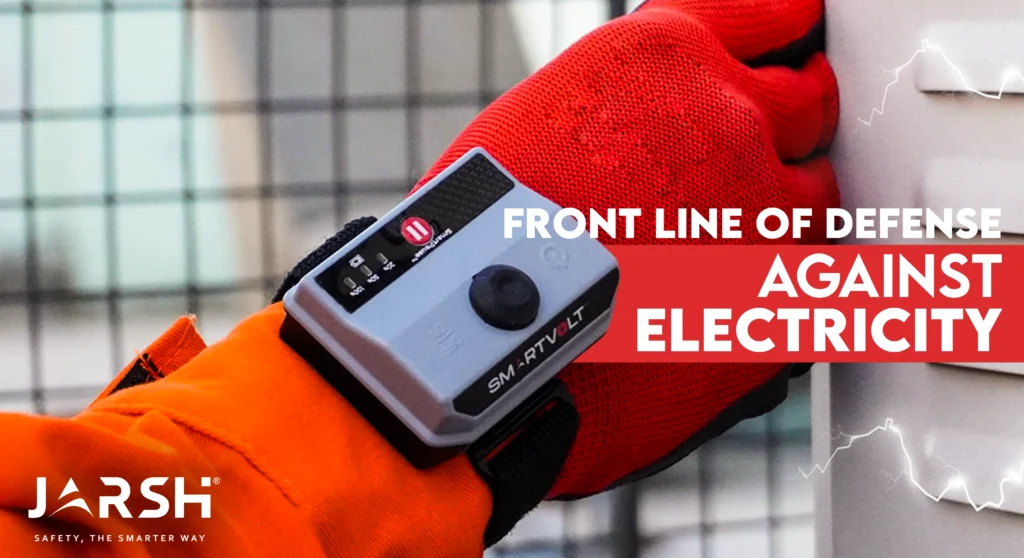
Built on our proven non-contact technology, this next-generation device senses live electrical fields safely through wire insulation, outer jackets, or panels from a distance. By providing clear, instantaneous alerts before any physical tools or hands touch the line, it acts as an invisible shield for your crew. Designed to be both rugged and lightweight, the SmartVolt™ 2.0 seamlessly integrates into daily operations, establishing a verified safe work zone in seconds and ensuring that checking for voltage is the safest part of the job.
Verified detection range by voltage level:
| Voltage | Detection Distance |
-
| 220V AC | 0.15 metres |
-
| 1 kV AC | 1.1 metres |
-
| 6.6 kV AC | 1.7 metres |
-
| 11 kV AC | 1.9 metres |
-
| 33 kV AC | 2.2 metres |
-
| 66 kV AC | 2.5 metres |
How SmartVolt Works in the Field
Deployment is simple enough to be adopted across a contract workforce, not just permanent staff.
-
Step 1: Mount the device. SmartVolt clips onto the helmet (side or peak mount), wrist band, or directly onto PPE. No tools required. Setup takes under 30 seconds
-
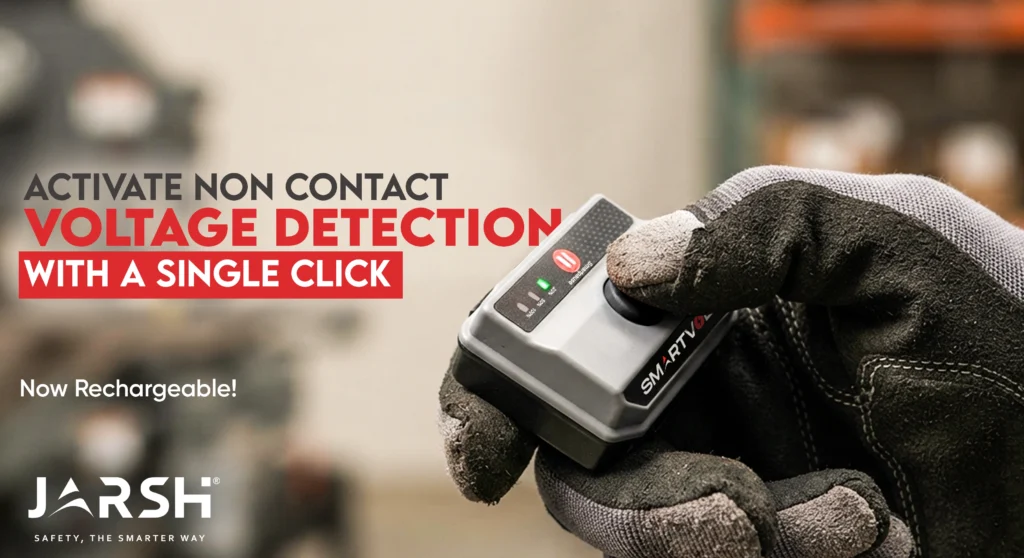
Step 2: Power on. A single button starts the device. The three-LED battery indicator confirms operational status. Runtime is 150 hours.
-
Step 3 — Approach the work area. As the worker moves toward a conductor, SmartVolt continuously samples the electromagnetic environment. No action is required.
-
Step 4 — Alarm activates at safe distance. If a live conductor is within detection range, the red LED flashes and the buzzer activates. At 33kV, this happens 2.2 metres before the worker's body reaches the conductor. At 11kV, at 1.9 metres. At 220V, at 15 centimetres.
-
Step 5 — Worker stops and verifies. The alarm prompts the worker to halt, back away, and verify whether the line was correctly de-energised. No phone call needed. No radio to the control room. The device on their helmet told them.
-
Step 6 — SmartPause™ if entering a known live zone. For work that deliberately involves proximity to live conductors with proper authorisation and protective equipment, the SmartPause™ function can be activated. The alarm resumes automatically on exit.
The Modern Workflow: Powered Up and Ready on Demand
An upgraded safety tool deserves an upgraded power system that matches the fast-paced, mobile workflow of modern maintenance teams. The SmartVolt™ 2.0 introduces standard USB-C fast charging, eliminating the classic productivity killers that plague legacy hardware. Teams no longer need to hunt down specialized batteries or pack custom power bricks. Because it is fully compatible with the universal USB-C cables, vehicle ports, and power banks your crew already carries, a quick top-up in the service truck ensures your primary electrical safety tool is always powered up and ready to deploy instantly.
Talk to a Jarsh Safety Expert
If your linemen are working on distribution lines, substations, or transmission infrastructure without a point-of-work voltage detection device, this is not a cautionary tale from another organisation. It is a near-miss from your own future.
SmartVolt is certified, field-proven, and available for deployment across your workforce today.
WhatsApp us now on +91 8340 84 84 84