
BLOG
“The Line was Off This Morning”: Is the Line Live Again?
November 18, 2026
CATEGORY: ELECTRICAL SAFETY SOLUTIONS
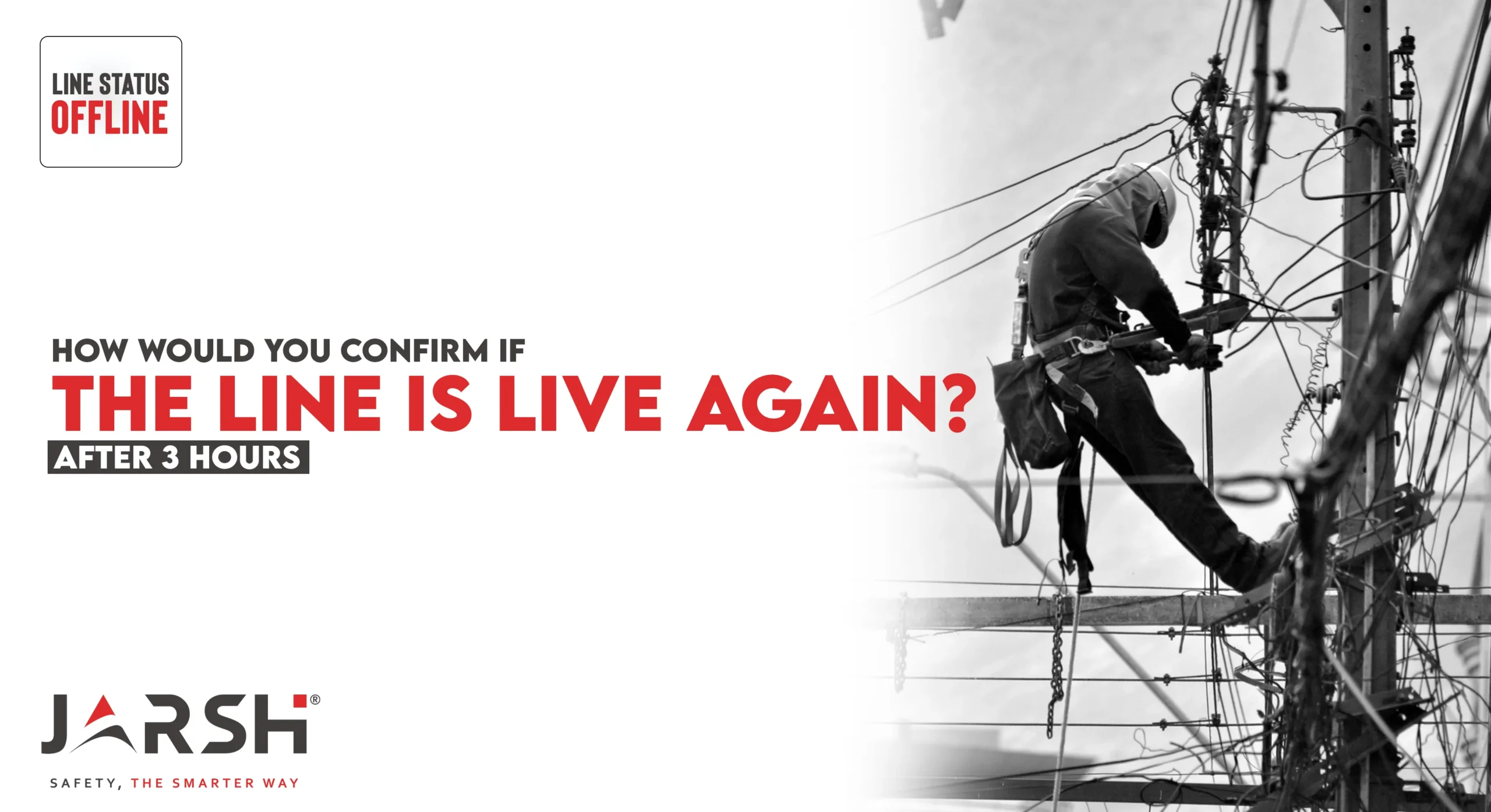
The Call That Never Came
At 8:30 AM, Ravi gets his confirmation. The feeder is shut down, and the permit is issued. He is a lone electrician with poles 4 to 8 to work through.
By 11:20 AM, he is on pole 6. Nobody has called him. But somewhere in the network, a switching decision has been made, and the line he was told was dead may not be dead anymore.
The line was off this morning, and that is the only thing Ravi knows for certain. Until now, the only way to check again was to climb up, climb down, and repeat at the next structure. Even then, a check only shows the line’s status at that moment.
Why Traditional Checks Fall Short
Isolation practice depends on a chain of human steps: shutdown requests, permits, and verbal confirmations. When one link breaks, the worker is left with an outdated assumption.
- A one-time check is a snapshot. It doesn’t cover the hours that follow.
- Climbing adds exposure. The worker goes to height just to find out if there is a hazard.
- A lone worker has no backup. There is no second pair of eyes to notice a change.
Indian power-sector safety practice, including the Central Electricity Authority (CEA) safety regulations, is built on isolation, verification, and permit-based work. VoltRadar™ supports that intent with continuous on-site monitoring after the permit is signed.
The Jarsh Solution: VoltRadar™
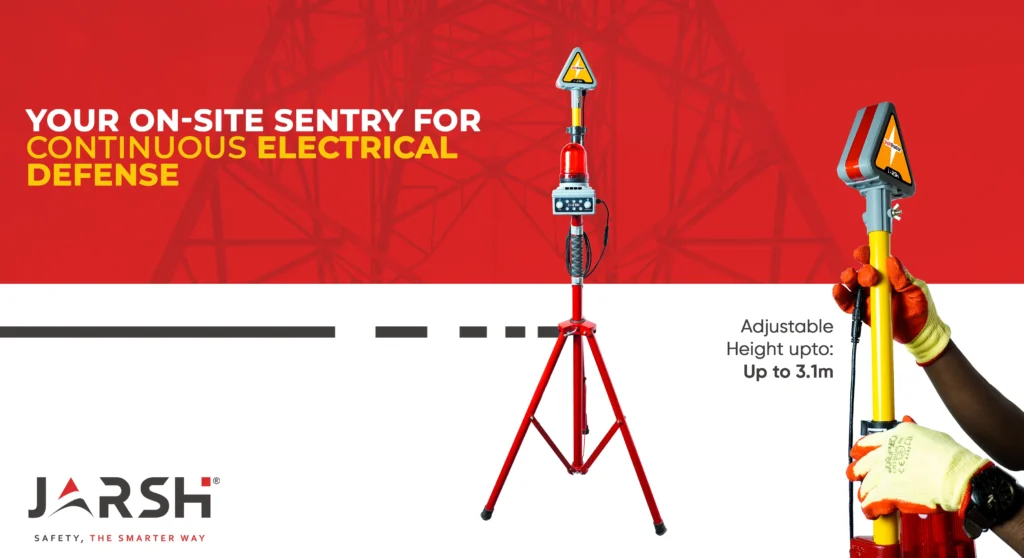
VoltRadar™ (JSVR-01) is a portable, tripod-mounted, rechargeable non-contact voltage detector. It identifies live electrical sources or leakage from a safe distance and warns the worker with visual and audio alarms.
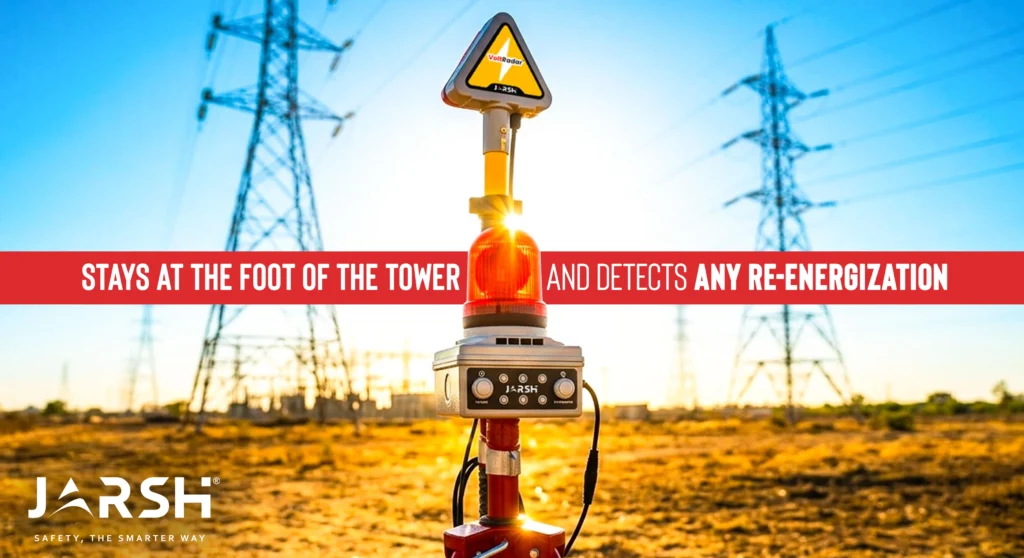
Set it up near the work zone, extend it to the required height, and keep working. If an electrical field appears, VoltRadar™ alerts you. No climbing is needed to check.
- Hands-free, continuous monitoring.
- Adjustable height up to 3.1 metres.
- Red LED and 90 dB beep so the warning is hard to miss.
- Tunable detection through the companion mobile app.
- SmartPause™ silences the alarm when you enter a known danger zone and reactivates automatically when you leave.
Specifications & Performance Table
- Weight : 8kg
- Noise Level : 90 dB
- Operating Temperature : 10°C to 50°C
- Storage Temperature : -20°C to 60°C
- IP Rating : IP 65
- Li-Ion, 11.1 V / 5000 mAh
- Charging : Type-C, 4 hours
- Run-time : 100 hours (varies with use)
- Material : Enclosure / Pole / Tripod - ABS plastic / FRP / Mild Steel
How It Works in the Field
- Power on. Press the On/Off switch. Green LEDs light up with a 1-second beep.
- Test it. Check near a 220 V socket before deployment.
- Set up. Lock the tripod securely and extend to the required height.
- Configure. Set detection distances in the mobile app.
- Work. Near an electrical field, VoltRadar™ gives a beep and a red LED alert. Use SmartPause™ for continuous exposure, and always confirm it has reactivated.
How to use:
-
Step 1: Power on. Press the On/Off switch. The bottom green LEDs light up with a 1-second audible alarm to confirm startup. While powered, the green LED blinks every 5 seconds.
-
Step 2: Test before you trust it. Check VoltRadar™ near a 220 V socket before deployment. Confirming it responds takes a few seconds and means you start the job with a device you’ve verified.
-
Step 3: Set up the tripod. Place the tripod securely and lock it so it cannot tip over. Mount VoltRadar™ and extend it to the height the work area needs.
-
Step 4: Configure detection distances. Use the companion mobile app to set distances and thresholds for the voltage level you are working near, all from a safe distance.
-
Step 5: Work, and let it watch. Near an electrical field, the device gives a beep with a red LED alert.
For continuous exposure, use SmartPause™ to mute the alarm temporarily. It reactivates automatically when the hazard is cleared, or you can resume it manually.
Deployed in the Field
VoltRadar™ is built for industrial, utility, and construction environments, where crews often work in remote locations. With a typical 100-hour runtime and Type-C charging, it suits long maintenance shifts.
Talk to a Jarsh Safety Expert
Is your lone-worker team still climbing to check whether the line is live?
WhatsApp us: +91 8340 84 84 84 to book a free site safety assessment and a VoltRadar™ demo.
📧 info@jarshsafety.com | 🌐 jarshsafety.com